Research
As a lab, we investigate a wide range of small DNA viruses and how they have evolved distinct strategies to usurp or inactivate host DNA Damage Response (DDR) signals. These viruses can be modified to develop new gene therapy vectors (AAV/rAAV), target cancer cells (MVM), or dissected to determine how they cause cancer (HBV).
Small DNA Viruses and DNA Damage
Microscopy
The Lab uses many different techniques to explore the life life cycles of different viruses:
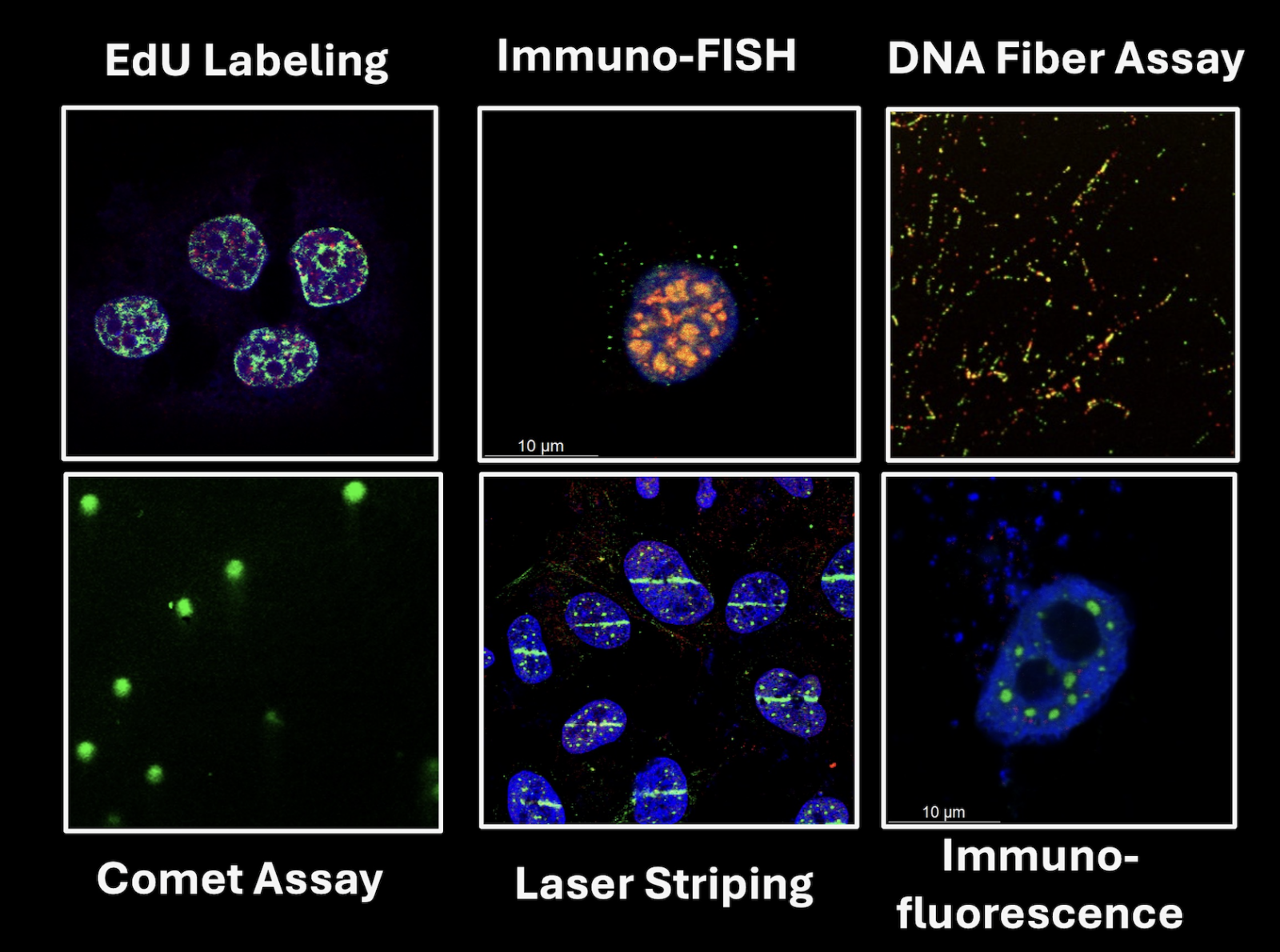
- EdU labeling to mark newly synthesized viral and cellular DNA
- Immuno-FISH to visualize viral genomes alongside DDR proteins
- DNA fibers analysis (single-molecule assays) to measure replication stress
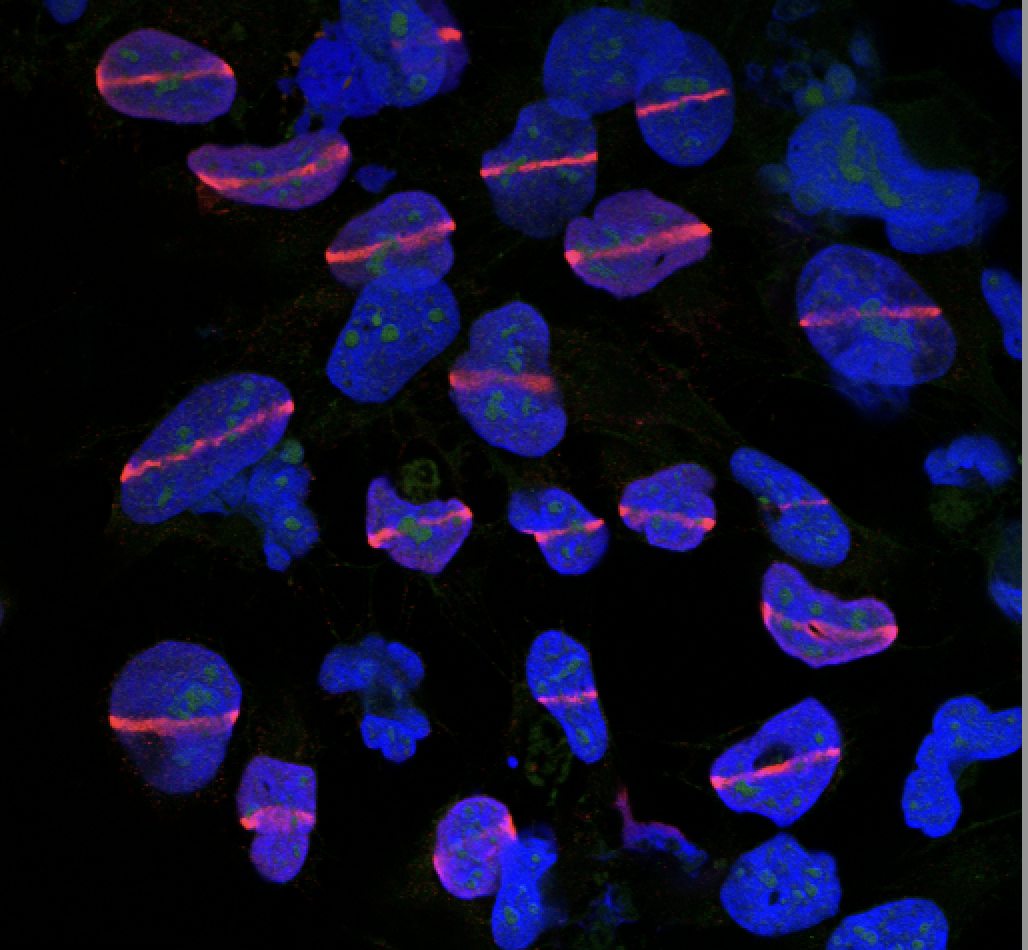
- Laser micro-irradiation to create localized areas of DNA damage in single nuclei
- Comet assay to quantify DNA breaks by measuring the “tails” of damaged DNA
These approaches let us follow where viral genomes go, what proteins they recruit, and how host genomes integrity changes over the course of infections.
Adeno-Associated Virus (AAV)
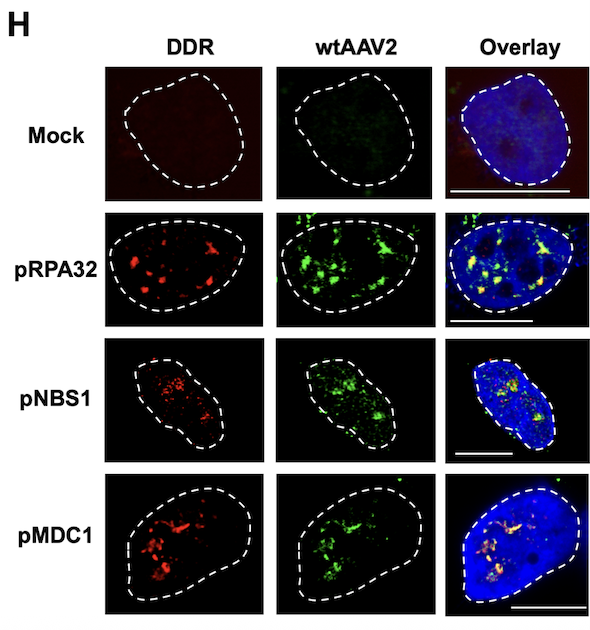
Adeno-associated virus type 2 (AAV2) is a single-stranded DNA virus of the Parvovirus family modified for use as recombinant AAV (rAAV) gene therapy vectors. Our work has shown that AAV2 genomes exhaust cellular stores of the host RPA protein, causing DNA damage that restricts viral gene expression , and that the host transcription factor KLF4 and the DDR protein PARP1 direct AAV2 localization to cellular DNA damage sites.
More broadly, we study how host architectural proteins such as CTCF are mimicked and usurped by DNA viruses to regulate viral gene expression. These findings guide the design of better rAAV vectors that persist long-term without adverse effects.
These studies are also critical for developing a better mechanistic understanding of how small DNA viruses navigate the nuclear milieu to establish themselves long-term or cause cell death.
Recombinant AAV (rAAV)
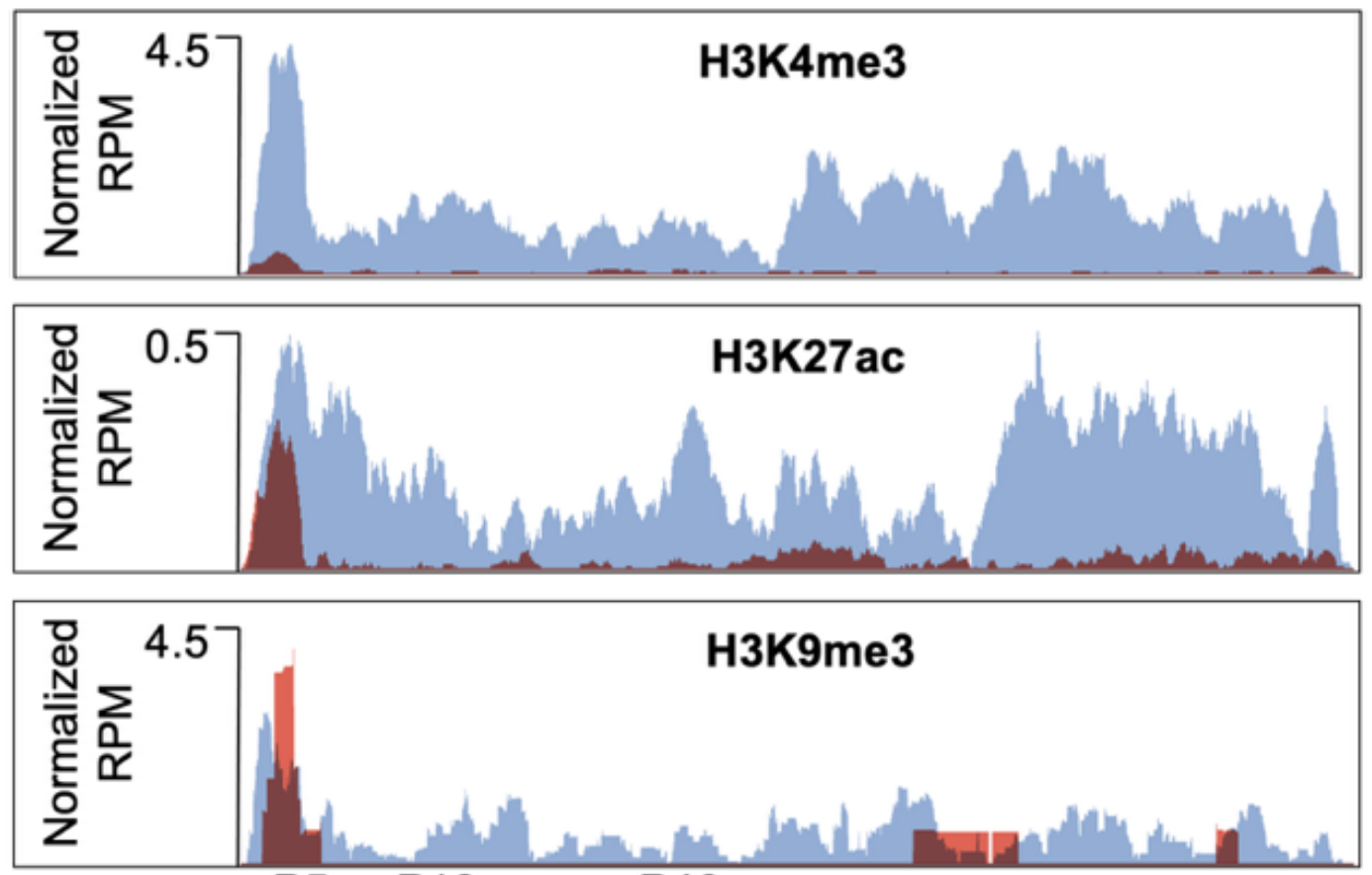
Recombinant AAV (rAAV) is the engineered platform for gene therapy: the viral rep and cap coding regions are removed and replaced with a transgene of interest, enabling gene transfer for monogenic diseases and cancers. High doses are often required, however, and our work shows that AAV2 genomes compete with the host cell for the single-stranded DNA binding protein RPA, so high-dose delivery can cause replication stress and cellular DNA damage. This underscores the need to engineer rAAV platforms that express efficiently at lower doses.
Hepatitis B Virus (HBV)

Despite decades of vaccines and antivirals, HBV remains a major global health concern, as the cccDNA episome forms the reservoir of HBV genomes in liver cells and drives HBV-induced liver cancer, and our findings will help develop antivirals that target this reservoir. One goal is to develop new technologies to monitor where cccDNA molecules localize in the nuclear compartment; our recent work shows HBV genomes associate with transcriptionally active host chromatin hubs, provoking replication stress and cellular DNA damage that may contribute to oncogenic transformation.
Minute Virus of Mice (MVM)
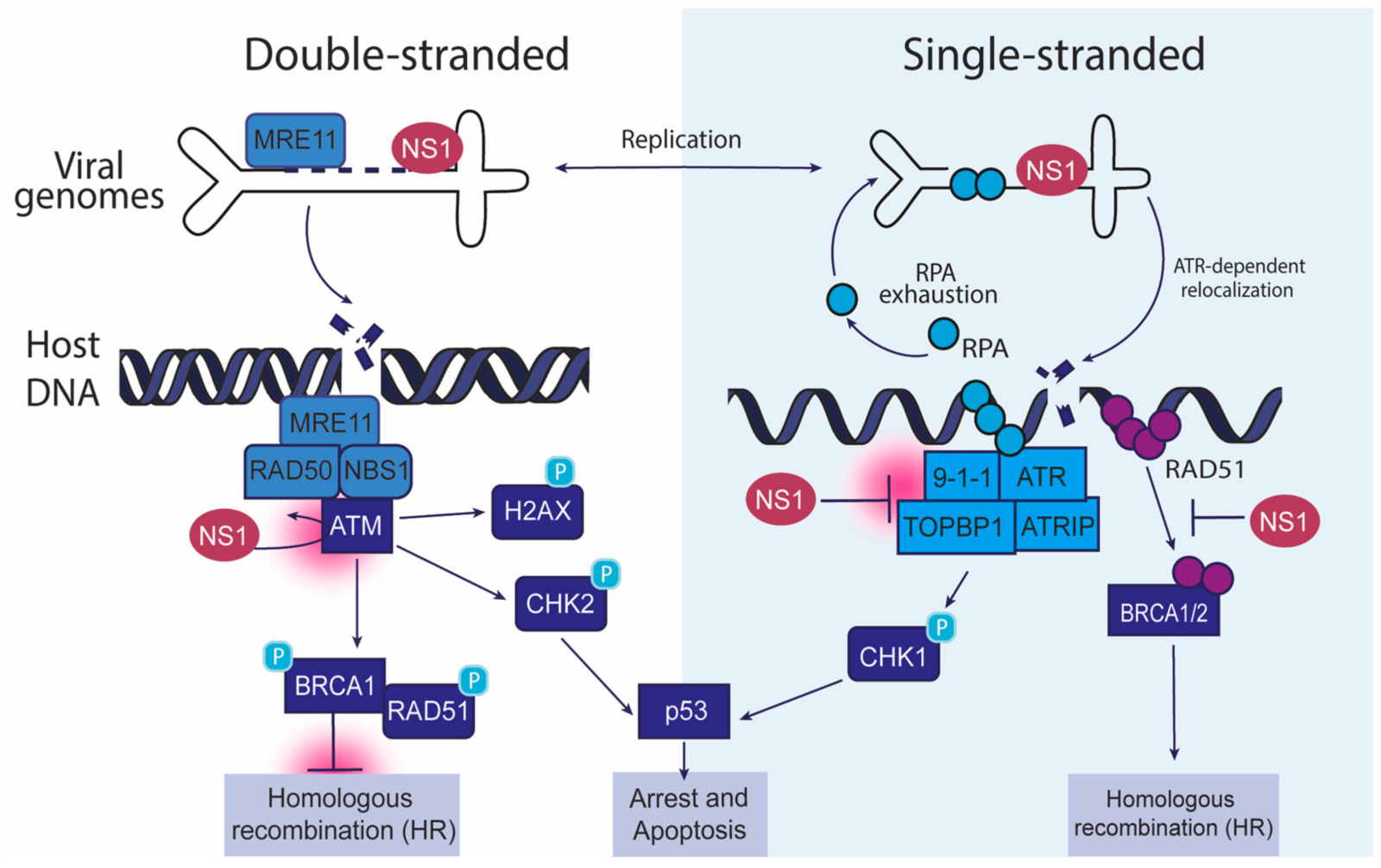
Using the non-integrative oncolytic parvovirus Minute Virus of Mice (MVM), we dissect how host signals modify chromatin dynamics and regulate the viral life cycle. Our work has shown that MVM localizes to cellular DNA damage sites to establish and amplify its lytic infection, that this localization depends on ATR signaling before it is inactivated by vigorous replication, and that MVM genomes induce replication stress by depleting cellular stores of the host RPA protein, leaving the host genome vulnerable to further DNA breaks.